Nichelle Murray
The ChangelingNichelle Murray is Emma Valentine’s longtime friend and a perceptive, outspoken presence at a dinner that turns into the threshold of Emma’s labor. She brings news of Emma’s past and her wishes to Apollo Kagwa, then sets aside the unfinished revelation to help Emma reach home for the birth. Her abrupt shift from teasing companion to urgent practical support makes her one of the scene’s clearest witnesses to both the couple’s intimacy and the risks of their plans.
Identity and Friendship
Nichelle arrives at Bouley as part of a dinner with Emma and Apollo. When Apollo reaches their table, Nichelle rises to hug him and playfully presents him as the father of the bride. Emma, thirty-eight weeks pregnant and unable to stand, grins at Nichelle’s teasing. Nichelle continues clinging to Apollo’s arm; he recognizes that she is drunk. The scene places her comfortably within the couple’s company, though her familiarity with Apollo does not stop her from addressing him with teasing candor.
The dinner also gives Nichelle a distinct life beyond the immediate crisis. When Apollo asks how Los Angeles is treating her, she says she is happy there and that time passes more slowly when she is happy. Emma adds, with evident pride, that Nichelle writes for The Witching Hour. The brief exchange presents Nichelle as someone whose life and work are established elsewhere, while also showing Emma’s pleasure in speaking about her friend’s success.
Apollo’s thoughts situate the friendship in a longer shared history. He imagines Nichelle and Emma as girls in Boones Mill, Virginia, fortunate to have found and loved each other. He places their bond beside his own friendship with Patrice Green, another Black book dealer whom he met through their trade. That parallel belongs to Apollo’s reflection, but it clarifies how he regards the women’s connection: as a lasting friendship he values, not merely a relationship surrounding Emma’s pregnancy.
The Dinner and the Unfinished Disclosure
The restaurant’s elaborate rooms give the dinner an almost storybook atmosphere. Apollo is led through the waiting room into a dining room with gold-leaf ceilings, Burgundy stone floors, and Persian rugs, where Emma is waiting. At the table, Nichelle’s open bottle of white wine and the mussed tablecloth contribute to the impression of an evening already loosened from formality. Apollo is tired and worried about the bill, but the company briefly makes him happy.
That ease breaks when Nichelle tells Apollo that a nude photograph of Emma is displayed in an art gallery in Amsterdam. Apollo responds by asking whether it is in color or black and white, a startled attempt to answer an unsettling revelation. Nichelle says Emma had told her about her trip to Brazil and Apollo’s welcome at the airport when she returned. She then connects the photograph to events Emma had not, in her account, fully disclosed to Apollo.
Nichelle identifies one of those events as Emma’s meeting with a Dutch photographer in Salvador, about a month before Emma returned to the United States. Apollo’s attention fixes on the photographer, and the revelation unsettles him. Nichelle tries to redirect the conversation from his suspicion toward the more important matter she means to raise. Her disclosure therefore does not resolve what happened in Brazil; it makes clear that she knows more than Apollo does and is trying to approach it carefully.
The Three Wishes
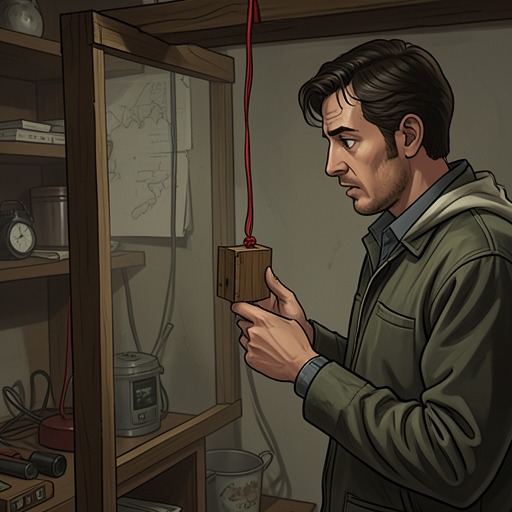
The conversation turns to the red string associated with Emma’s wishes. Apollo says that he kept the string in his wallet, behind his driver’s license, so that he would not forget his promise. Nichelle tells him that, in her view, he has already granted Emma two wishes: a good husband and a healthy child. She also says Emma never told him what those wishes were. These are Nichelle’s account of the wishes, not a disclosure from Emma herself, and she presents them as part of a larger confidence.
Nichelle begins to indicate the third wish with her raised fingers, but opens her hand before revealing it. She says that the third wish is the only one that has not come true and explains that she is trying to tell Apollo about it without breaking Emma’s trust. That qualification changes the tone of her earlier teasing: her drunkenness had made her seem playful, but her insistence and the care she takes over Emma’s confidence show the seriousness of her purpose. Apollo says he is listening, yet the conversation ends before Nichelle can explain the wish. The waiter arrives in alarm, telling Apollo that Emma needs him.
Support During the Birth Crisis
Nichelle’s role shifts immediately from confidante to practical support. While Apollo is away with Emma, Nichelle settles the bill. When he returns holding Emma under one arm, she sees how red and exhausted Emma looks and takes out her phone to call 911. Emma tells her not to call. Apollo attempts to pay Nichelle for the meal, but she explains that she had planned to cover the bill since making the reservation and had already told Emma; she simply forgot to tell him. The moment preserves the ordinary social detail of the dinner even as the birth becomes urgent, and leaves Apollo with little in his stomach beyond bread and bourbon.
Nichelle has to contend with Emma’s refusal of both an ambulance and a hired car. Emma reminds her that the couple intend to have the baby at home, while an ambulance would take her to a hospital rather than to their apartment. Nichelle offers to hail a cab or request a Lyft, but Emma refuses those options too. They are downtown on Duane Street on a Friday night; the West Side Highway is expected to be badly congested, making the drive to Washington Heights an hour or longer. The Chambers Street station is only four blocks away, and an A train could get them home in thirty-five minutes. Nichelle’s offers show her effort to find a workable alternative, even as Emma insists on the plan she and Apollo have chosen.
Narrative Role
The interrupted conversation gives Nichelle a revealing position in the episode: she knows about Emma’s Brazil journey, the photograph, and the meaning she assigns to the third wish, while Apollo does not. Yet she neither exposes Emma’s confidence outright nor gets to finish explaining it. The waiter’s call cuts across the disclosure and turns knowledge into unfinished business.
That interruption also binds the private history of the wishes to the immediate demands of childbirth. Nichelle begins the evening as Emma’s teasing friend, becomes the bearer of difficult information, and ends it trying to protect Emma while helping her get home. Her support is concrete rather than abstract: she manages the bill, considers emergency transport, and weighs the actual distance and traffic against the nearby train. The scene leaves her account of the third wish unresolved, but establishes both her loyalty to Emma and the limits placed on what she can say at that moment.